
e-Methane
e-Methane as a versatile hydrogen derivative
e-Methane is synthetically produced, renewable methane that represents another potential building block of the energy transition. Produced from green hydrogen and CO2 (biogenic or from the air), e-Methane is chemically identical to natural gas and can be used in exactly the same way as conventional gas or biomethane. As a so-called “drop-in fuel”, it can therefore be used in existing applications, networks, and storage facilities without any modifications. In this way, it consistently leverages the existing gas infrastructure and enables long-term energy storage. As an RFNBO-certified hydrogen derivative, e-Methane can thus make a decisive contribution to the decarbonization of sectors that are difficult to electrify - from industry to transportation and shipping to power generation - while simultaneously strengthening supply security and system stability.
How is e-Methane produced?
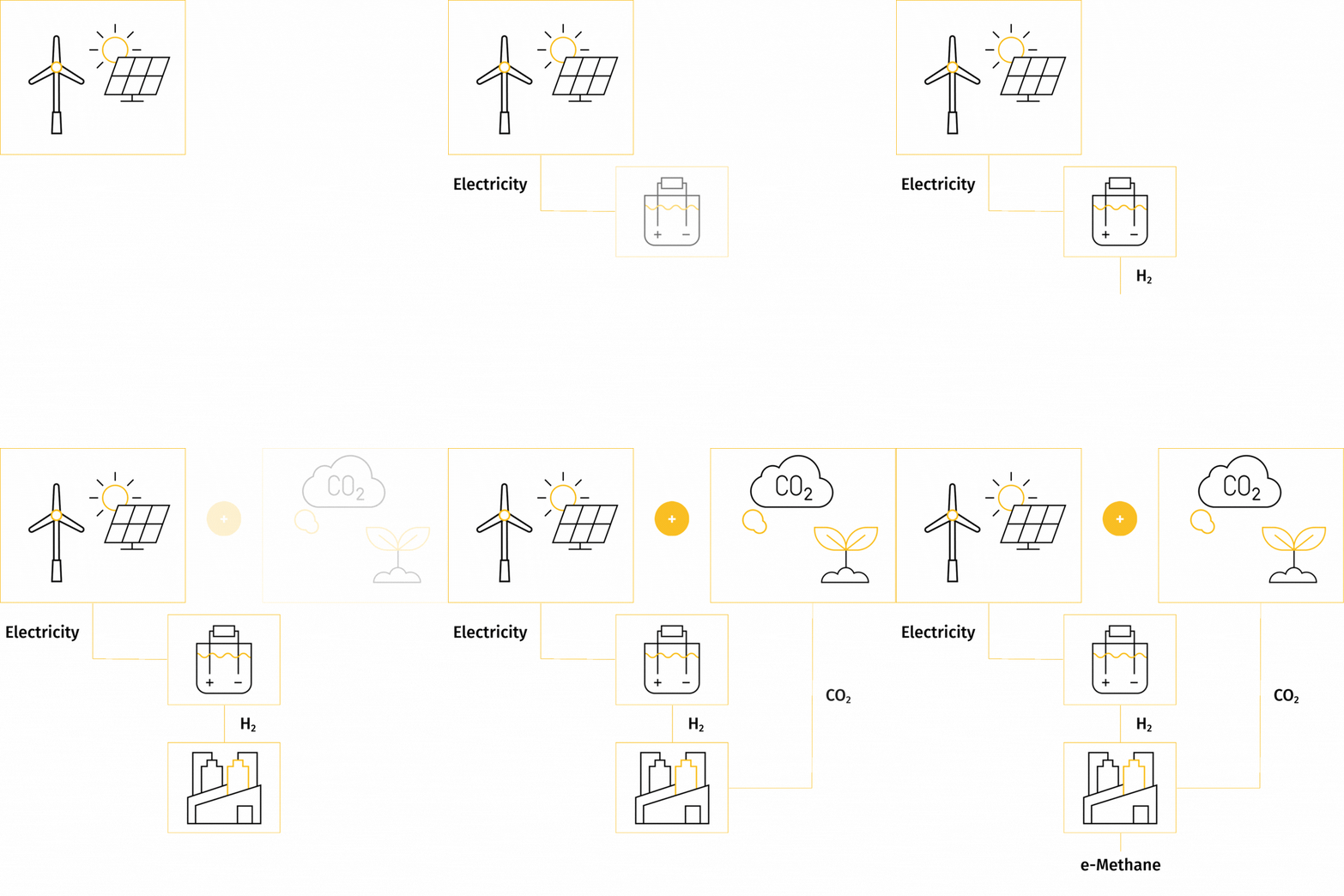
e-Methane is produced in power-to-gas plants: First, water is split into green hydrogen through electrolysis using renewable electricity, such as wind power. In a second step, this hydrogen reacts with CO2 - for example, from biogas plants - to form e-Methane (methanation). Alternatively, the conversion can also be carried out using thermochemical gasification.
Why does e-Methane play a key role in the energy transition?
The transformation of the energy system will not be achieved through a single energy carrier, but through the intelligent interplay of a range of different solutions. In addition to key technologies such as electrification and hydrogen, there is an immediate need in many application areas for energy sources that are already available, can be stored and transported, and can be seamlessly integrated into existing infrastructure.
e-Methane could fill precisely this gap: it combines the advantages of electricity-based energy carriers with the existing gas infrastructure. As such, e-Methane can make a contribution to a resilient, flexible, and low-carbon energy supply today, while also serving as a bridge to a fully decarbonized energy system in the future.
In addition to existing pipelines, terminals for shipping and caverns for storage are immediately available. The storage of excess renewable energy, especially in the summer, is thus not a vision but a reality. e-Methane is therefore becoming a key component in the gradual replacement of today’s fossil fuel-based energy supply.
What are the advantages of using e-Methane?
Existing infrastructure
e-Methane has the same physical properties as fossil natural gas. This means it is 100% compatible with the existing natural gas grid and can be used directly in current applications. No complex or costly modifications are required.
Potential for CO₂-reduction
By using renewable electricity and CO2 as feedstock, e-Methane enables a reduction in greenhouse gas emissions - particularly as an alternative in industry and the transportation sector.
Europe-wide availability
As a renewable fuel of non-biological origin (RFNBO), e-Methane - a hydrogen derivative - can be transported and distributed throughout Europe via the existing natural gas network.
What do we offer our customers?
As an experienced gas wholesaler, we support you in integrating e-Methane into your supply and procurement strategies. Drawing on our many years of market expertise, we guide you on the path toward a future-proof and economically viable energy supply.
For whom is e-Methane particularly relevant?
- Chemical industry and refineries
- Glass production
- Cement industry
- Steel production
- Transportation and shipping
As part of our Strategic Partnership, we will work with you to discuss new requirements, solutions, and technologies for a sustainable energy system of the future, and we would be happy to advise you on how to ensure a supply of e-Methane that meets your needs.
Questions and Answers about e-Methane
Explore answers to frequently asked questions about the production, applications, and potential of e-Methane.
e-methane (also known as SNG) is a renewable, synthetically produced gas generated from RFNBO-compliant, so-called 'green' hydrogen and CO₂. It is chemically identical to natural gas and can be used in existing gas infrastructure without the need for any modifications.
e-Methane is particularly relevant for companies with high energy requirements or processes that are challenging to electrify. It is particularly well suited to energy-intensive industries (e.g. chemicals, steel, cement, glass), the transport and shipping sectors, and electricity generation, thereby supporting CO₂-reduction and security of supply.
Yes, e-Methane can be transported and used entirely via existing gas networks, as it has the same physical properties as natural gas. There is no need to adapt plants, infrastructure or storage facilities, which allows for easy integration into existing energy systems.
As an experienced energy trader, VNG Handel & Vertrieb offers comapnies comprehensive solutions for e-Methane – ranging from personalised advice on supply concepts tailored to their needs as part of the Strategic Partnership (StraPa) to the integration of e-Methane into existing energy and procurement strategies.
Yes, as an H2-derivative, e-Methane meets the same regulatory requirements as green hydrogen and can, for example, be used to meet GHG- and RFNBO-sub-quotas in the transport sector. It is also a compliance option for the planned green gas quota.
Transformation
We actively shape the transformation of the energy industry and support our customers as a strategic partner on their journey toward a future-ready energy system.
Contact
Do you have questions about e-Methane? Feel free to contact us. We look forward to hearing from you!